
How to Confirm Whether the Gopher Tunnel Is Active
Learn how to confirm an active gopher tunnel by opening the soil plug, checking for fresh sealing activity, and choosing the best installation spot for your gopher control device.
Gopher Control Guide Series
Move through the KEVENZ gopher-control articles as one connected guide instead of treating each post like an isolated page.
After reading our previous guide, How to Find an Active Gopher Tunnel Entrance, you may already know how to locate a possible gopher tunnel entrance in your yard, garden, or lawn. However, finding an entrance is only the first step. Before installing a gopher control device, it is important to confirm whether the tunnel is still active.
Once you find a possible active gopher hole, carefully remove the soil plug from the entrance and leave the opening exposed, as shown in Figure 1. Do not enlarge or damage the tunnel too much. Simply clear away the blocked soil so the entrance remains open and the gopher can detect that the tunnel has been disturbed.
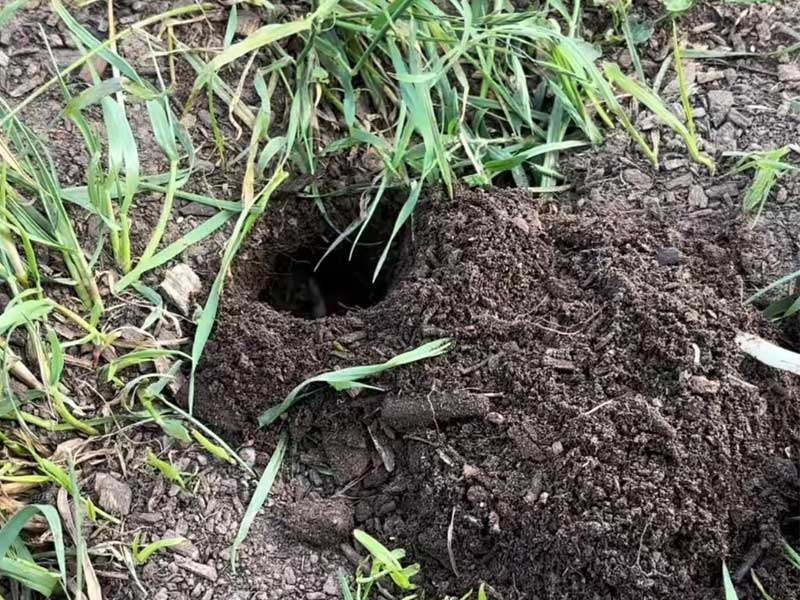
Figure 1
Then, check the same opening again after 1 to 4 hours. If the entrance has been sealed with soil again, as shown in Figure 2, this is a strong sign of fresh gopher activity. Gophers often return to close exposed openings in order to protect their underground tunnel system.
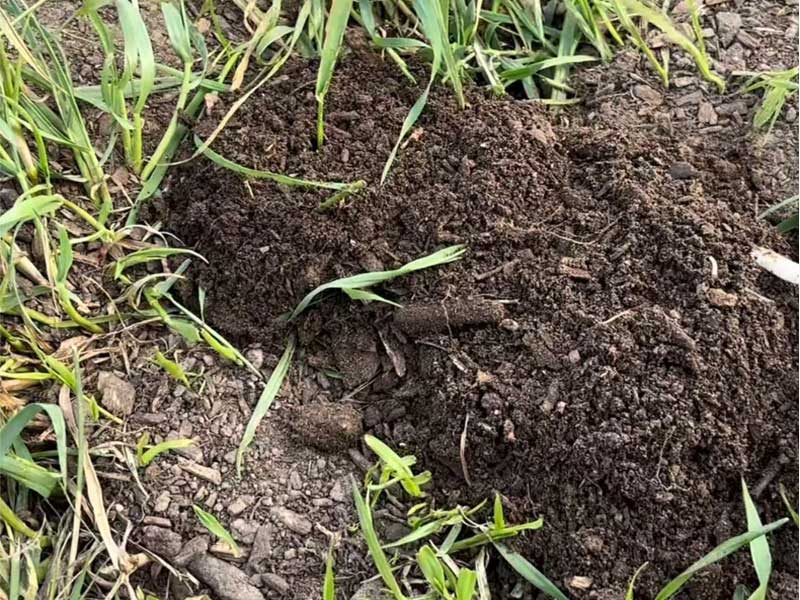
Figure 2
A sealed gopher hole after a short period of time usually means that the tunnel is being used. In this case, the re-sealed entrance is one of the best places for gopher trap placement or gopher control device installation. Installing the KEVENZ device near this confirmed active gopher tunnel can help improve control results because the device is placed closer to the gopher’s current movement area.
For better results, it is recommended to perform this test during the most active gopher periods:
- Morning: 6:00 AM – 9:00 AM
- Afternoon: 1:00 PM – 3:00 PM
- Evening: After 7:00 PM
If the opening is re-sealed during these time periods, it usually means the tunnel is active and should be treated as a high-priority installation location.
The key rule is simple: do not install the device based on one gopher mound or one visible hole alone. First, find the tunnel entrance, open the soil plug, and then confirm whether the gopher seals it again. A recently re-sealed entrance is often the best installation spot for an effective gopher control setup.
Original Statement
This article is original content published by KEVENZ and is protected by applicable copyright laws. When quoting, referencing, or reposting any portion of this page, please retain the original source link and clearly identify KEVENZ as the source.
Keep Building Your Gopher Control Guide
These related KEVENZ blog posts connect directly to the same topic cluster, so readers can move from problem discovery to setup, placement, and better catch results without dropping out of the journey.
Reader comments
Share your experience, field notes, or practical questions about this topic.
JWpGuDMCRppBQJTlOyXWk
eqnmXyhpNxREGdbWChofqs